AI-BASED DECISION INTELLIGENCE
Better Decisions
Under Uncertainty
Aegis Decision Systems is an AI-based decision intelligence system built around a unique structured decision-making methodology
It is designed for situations where the stakes matter, the information is incomplete, the future is uncertain, and a simple answer is not enough.
Aegis does not merely collect information or generate analysis
Not just information
•
Not just AI analysis
•
A decision
researches the evidence
verifies critical facts
separates fact from assumption
challenges the emerging thesis
evaluates competing scenarios
quantifies uncertainty where the evidence and methodology support it
identifies what could make the conclusion wrong
and produces a clear decision
WHY AEGIS?
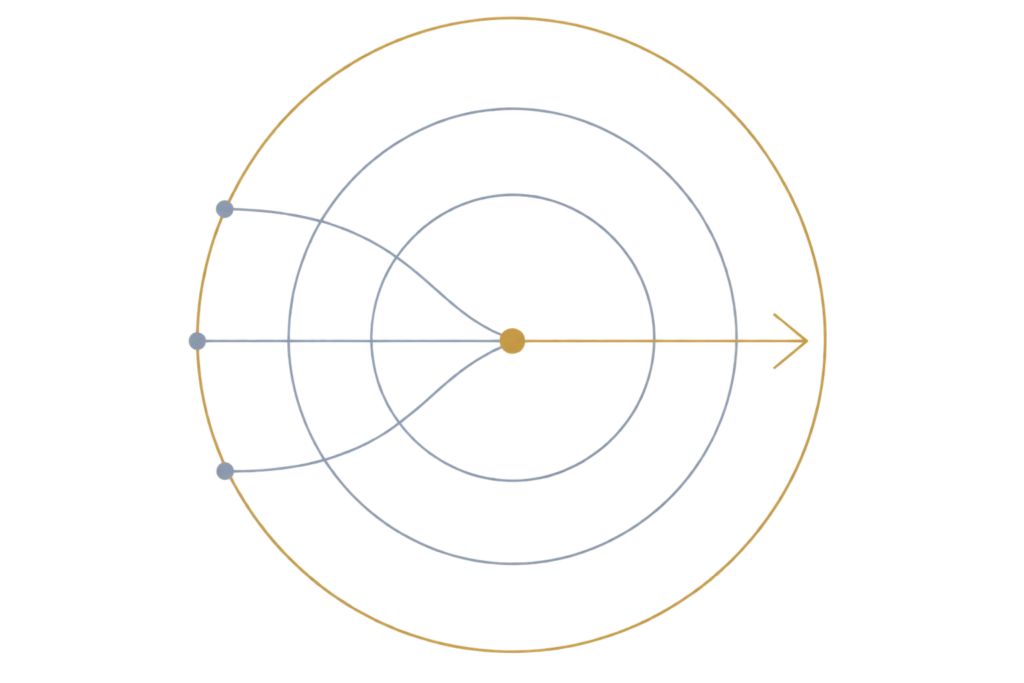
In ancient Greek tradition, the Aegis was associated with Zeus and Athena — a symbol of protection, strength and readiness in the face of danger
That idea captures the purpose of Aegis Decision Systems
Aegis cannot eliminate uncertainty. No serious decision system can
But it can help protect a decision from:
- incomplete research
- weak assumptions
- confirmation bias
- misleading narratives
- poor-quality evidence
- overconfidence
- hidden risks
- failure to consider alternative outcomes
Protect the decision before you commit the capital, strategy or reputation
FROM INFORMATION TO DECISION
The World Does Not Have an Information Shortage
Investors have research

Executives have consultants

Governments have analysts
Everyone has search engines

And now everyone has artificial intelligence
The scarce resource is different:
The ability to turn imperfect information into disciplined judgment
Traditional research asks:
“What do we know?”
Aegis asks:
“Given everything we know — and everything we may not know — what should we do?”
That is the difference between information and decision intelligence
HOW AEGIS WORKS
One Question. Multiple Challenges. One Decision
A serious decision should not depend on one line of reasoning. Aegis structures each problem into a sequence of independent analytical stages
Define the decision
Aegis begins with the actual decision that must be made
Not:
“Tell me about this company”
But:
“At its current price, for this investment horizon, should capital be allocated to this security?”
Not:
“What is happening in this market?”
But:
“Which scenario is most likely over the next twelve months, and what would change that forecast?”
Defining the decision prevents one of the most common analytical failures:
Answering an interesting question instead of the question that actually matters
Build the evidence base
Depending on the case, Aegis may examine:
- financial statements
- regulatory filings
- company disclosures
- market data
- economic indicators
- industry research
- government information
- scientific and academic research
- historical data
- news
- competitive intelligence
- transaction information
- client-provided materials
- other relevant sources
The objective is not to collect the largest amount of information.
It is to build an evidence base strong enough to support — or reject — a conclusion
No source. No fact.
Verify the evidence
Information is not evidence until its quality is understood
Critical claims are examined for:
Source Quality
Where did the information originate?
Recency
Is it still current?
Corroboration
Can it be independently confirmed?
Consistency
Does it conflict with credible evidence?
Completeness
What important information may be missing?
Fact vs. Assumption
What do we know, and what are we merely inferring?
This reduces the risk of building sophisticated conclusions on unreliable inputs
Build the initial thesis
Aegis determines what the strongest available evidence appears to support
Depending on the problem, this may involve:
- valuation
- scenario analysis
- competitive positioning
- causal analysis
- historical comparison
- risk assessment
- market expectations
- strategic alternatives
- other analytical frameworks
But the initial thesis is not yet the decision. Because now Aegis tries to break it
Challenge the conclusion
Every Important Thesis Deserves an Adversary
Aegis uses an adversarial analytical stage — effectively a Devil’s Advocate function — to attack the emerging conclusion
It asks:
What evidence contradicts the thesis?
Which assumptions are doing the most work?
What has been overlooked?
What alternative explanation fits the same evidence?
What happens if the consensus is wrong?
What would make the decision fail?
The objective is not disagreement for its own sake.
The objective is to determine whether the conclusion survives serious opposition.
Agreement is not assumed. It must be earned
Quantify uncertainty
“Probably” Is Not a Probability
Where appropriate, Aegis develops:
Aegis determines what the available evidence can legitimately support. Numerical probabilities are published only when they can be derived from a defensible and reproducible quantitative mechanism. Where that standard cannot be met, Aegis uses evidence strength, ordinal ranking, justified ranges, or UNKNOWN rather than false numerical precision
Aegis does not pretend the future has only one path. It attempts to make uncertainty visible
The Quantification Gate
A number is a result, not an opinion. Before Aegis publishes a numerical probability or confidence measure, the system must establish a reproducible quantitative basis capable of producing that number. If the Quantification Gate is not passed, no numerical probability is published. UNKNOWN is an acceptable analytical result. Manufactured precision is not.
When the available evidence does not support a defensible conclusion, Aegis may return UNKNOWN rather than manufacture certainty.
Make the decision
Analysis must eventually end in a choice. Aegis integrates:
- evidence
- competing arguments
- probabilities
- risks
- alternatives
- uncertainties
- decision consequences
The final output explains:
What Aegis concludes
Why
How confident the conclusion is
What could make it wrong
What should cause the decision to be reconsidered
WHAT AEGIS CAN DECIDE
One System. Many Decision Problems
Investment analysis is the first major commercial application of Aegis
Investment analysis is one application of a broader decision-intelligence architecture designed for consequential decisions across multiple domains
But the methodology is broader. Aegis can be applied wherever the decision is consequential, alternatives compete, and uncertainty matters
Is this asset attractive at this price?
Aegis can analyze:
Stocks
ETFs
bonds
commodities
other supported investment assets
The question is not simply:
“Is this a good company?”
It is:
“Is this a good investment at today’s price and for this time horizon?”
Aegis may evaluate:
business fundamentals
financial performance
valuation
expected cash flows
competitive position
industry dynamics
market expectations
catalysts
downside risks
macroeconomic conditions
scenario outcomes
alternative investments
Typical questions:
- Should I buy this asset now?
- Should I continue holding it?
- At what price does the risk/reward become attractive?
- What is fair value?
- What is the probability-weighted outcome?
- What would invalidate the investment thesis?
Possible decisions can include:
BUY
•
HOLD
•
WAIT
•
BUY ON WEAKNESS
•
WATCHLIST
•
SELL
The question is not only what to own — but why
A portfolio is a system of interacting risks, exposures, correlations and objectives
Aegis can evaluate:
asset allocation
concentration
diversification
expected return
income generation
downside risk
liquidity
correlation
factor exposure
position size
portfolio constraints
replacement alternatives
Typical questions:
- Where should new capital go?
- Which positions contribute disproportionate risk?
- Which holdings no longer justify their place?
- Where are the hidden concentrations?
- Can expected return improve without unacceptable additional risk?
- How does one new asset affect the portfolio as a whole?
The objective is not simply to identify attractive assets
It is to make the best decision for the capital as a whole
Strategy is a choice among uncertain futures
Businesses regularly face decisions for which there is no perfect dataset and no guaranteed outcome
Aegis can analyze:
market entry
acquisitions
partnerships
product launches
capital raising
capital deployment
expansion
build & buy
timing decisions
strategic alternatives
Typical questions:
- Should we enter this market?
- Should we acquire this company?
- Should we partner or remain independent?
- Should we deploy capital now or preserve liquidity?
- Which strategic path produces the strongest probability-adjusted outcome?
Aegis compares alternatives through:
expected financial implications
execution risk
market structure
competitive dynamics
regulatory factors
timing
counterparties
dependencies
second-order effects
failure modes
The objective is not to predict the future with certainty. It is to determine:
Which decision remains strongest across the most plausible futures?
Understand the other side before making the move
Important decisions may depend on understanding another company, investor, partner, acquisition target, supplier or counterparty.
Aegis can consolidate fragmented information into a structured analytical picture around a specific decision
Analysis may examine:
ownership
management
financial condition
strategic interests
corporate relationships
reputation
competitive position
regulatory exposure
incentives
dependencies
conflicts of interest
vulnerabilities
warning signals
Typical questions:
- What do we actually know?
- Which claims are independently verifiable?
- What important information may be missing?
- Are their incentives aligned with ours?
- What hidden dependencies exist?
- What could materially change our decision to work with them?
The objective is not merely to produce a profile. It is to determine:
How should this information affect the decision?
What is most likely to happen — and how sure are we?
Markets, businesses and political systems generate endless predictions
Far fewer predictions are structured so their accuracy can actually be measured
Aegis may develop:
competing scenarios
probability estimates
expected ranges
key assumptions
principal risks
conditional variables
trigger events
evaluation dates
Typical questions:
- What is the most likely outcome?
- Which scenarios are best supported by the available evidence?
- What variables matter most?
- Which risk is being underestimated?
- What evidence would cause the forecast to change?
Predict first. Measure later
Where appropriate, Aegis can freeze the forecast before the outcome is known
A forecast may record:
Forecast Date
Evaluation Date
Reference Value
Expected Outcome
Expected Range
Probability
Key Assumptions
Invalidation Conditions
When the evaluation date arrives, the forecast can be compared with reality
No hindsight
No rewriting after the fact
We measure the misses too
Political uncertainty can become financial uncertainty
Elections, sanctions, leadership changes, regulation, trade policy and international conflicts can materially alter business and investment outcomes
Aegis can analyze:
elections
political transitions
sanctions
regulatory changes
government policy
trade restrictions
international conflicts
cross-border economic relations
political instability
policy-driven market risk
Typical questions:
- Which scenario is most likely?
- With what level of evidentiary support and uncertainty?
- Which actors have the strongest incentives?
- What could materially change the trajectory?
- Which second-order effects are being ignored?
- How would the outcome affect a specific company, market, investment or strategic decision?
Aegis does not analyze geopolitics as an academic exercise
It analyzes how geopolitics changes the decision
Every serious Aegis forecast identifies not only what the system expects to happen, but what observable evidence would weaken or falsify that conclusion. A forecast that cannot be proven wrong cannot be properly evaluated
Aegis searches for observable precursor signals before they become conventional narratives. The system looks for evidence that should exist if a hypothesis is true, tests alternative explanations, records expected evidence that is missing, and updates the analytical judgment accordingly. An anomaly is not automatically a signal. Competing explanations must be tested first
Aegis asks a second question: If this hypothesis were true, what should we already be able to observe? When expected evidence is absent, that absence is recorded and evaluated rather than ignored
AEGIS is not another research assistant
AEGIS is a decision-intelligence system
Investments are simply its first application
WHAT AN AEGIS DECISION REPORT DELIVERS
The analysis ends with a conclusion
Aegis is designed to make the result usable
Depending on the case, an investment report may include:
EXECUTIVE DECISION
A clear conclusion
REFERENCE PRICE
The price being evaluated
FAIR VALUE
Aegis’s estimate of reasonable value
DEFENSIBLE VALUATION RANGE
A realistic range rather than artificial precision
PREFERRED ENTRY RANGE
Where expected return becomes more attractive
MAXIMUM RATIONAL PRICE
The level above which risk may no longer justify expected return
EXPECTED RETURN
Where appropriate, probability-weighted return estimates
CONFIDENCE
How strongly the evidence supports the conclusion
BULL / BASE / BEAR
Alternative economic outcomes
PROBABILITY & FORECASTING
Explicit probability assessments
DEVIL’S ADVOCATE
The strongest case against the conclusion
DECISION TRIGGERS
What developments should cause reassessment
BUSINESS QUALITY ≠ INVESTMENT QUALITY
A Great Company Can Still Be a Bad Investment
One of the most important Aegis principles is the separation between:
“Is this a strong business?”
and
“Is this an attractive investment at this price?”
A stock can disappoint even when the company performs well if the market has already priced in too much success
Conversely, a less fashionable company can become attractive if expectations and valuation are sufficiently low
That distinction is why Aegis analyzes:
price
expectations
time horizon
probability
return
margin of safety
Not just the company story
SINGLE AEGIS DECISION
One Defined Question. One Structured Decision.
You do not need a membership to use Aegis. Submit an asset and define the decision you want evaluated
Typical report:
- Executive Decision
- Evidence Review
- Fundamental Analysis
- Valuation
- Fair Value
- Preferred Entry Range
- Bull / Base / Bear scenarios
- Probability Assessment
- Key Risks
- Devil’s Advocate
- Confidence Level
- Decision Triggers
SINGLE AEGIS DECISION REPORT
$495
Upgrade to any Aegis membership within 14 days and the full $495 will be credited toward your first membership payment
AEGIS MEMBERSHIP
Decision Intelligence When You Need It
For clients who evaluate opportunities throughout the year
SILVER
Up to 2 Standard Decisions per month
You choose the asset. Aegis performs the analysis
MOST POPULAR
GOLD
Up to 5 Standard Decisions per month
For active investors who regularly evaluate opportunities or existing positions
PLATINUM
Up to 10 Standard Decisions per month
Priority Processing
Priority Reassessment of Existing Decisions
VIP
YOUR AEGIS ANALYTICAL FAMILY OFFICE
For clients who want the decision system applied to a portfolio rather than individual assets.
Aegis builds and maintains a 10-asset analytical portfolio around agreed objectives, investment horizon and risk parameters
VIP may include:
Initial analysis of up to 10 assets
Ongoing thesis monitoring
Material-change monitoring
Valuation updates
Decision Trigger monitoring
Reassessment when important conditions change
Portfolio risk analysis
Concentration analysis
Capital allocation review
Replacement opportunity analysis
New opportunity analysis
Portfolio-level scenario analysis
Priority access to Aegis
Ongoing decision support
Aegis maintains the analytical portfolio and provides recommendations
The client retains custody and control of assets and executes transactions
Standard and Strategic Decisions
STANDARD DECISION
For one clearly defined investment, business, company, asset or counterparty question
STRATEGIC / CUSTOM DECISION
For complex business, corporate, legal-structure, geopolitical, multi-country or multi-scenario questions
MEMBERSHIP COMPARISON
.
Single
Silver
Gold
Platinum
VIP
Standard Decisions
1
2 / month
5 / month
10 / month
10-Asset Portfolio
Decision Triggers
Yes
Yes
Yes
Yes
Yes
Reassessment
Available
Included
Included
Priority
Ongoing
Portfolio Monitoring
No
No
No
No
Yes
CUSTOM DECISIONS
Strategic / Custom Decisions
Some of the most valuable decisions do not fit neatly into a category
You do not need to determine which analytical framework should be used
Simply tell us:
What are you trying to decide?
Aegis will determine how the problem should be structured
For custom assignments:
Question
Aegis Review
Scope & Price
Client Approval
Payment
Analysis
Decision
Starting at
$2,500
Institutional
For family offices, advisers, investment organizations and corporate teams.
Enterprise
For organizations requiring multiple users, higher decision volume, custom workflows and custom deployment.
AEGIS RECORD
Forecast. Freeze. Verify
No hindsight. No rewriting after the fact. We measure the misses too
A public record may ultimately show:
Forecast
Frozen Date
Expected Outcome
Actual Outcome
Result
[Case]
[Date]
[Prediction]
[Actual]
HIT / MISS
[Case]
[Date]
[Prediction]
[Actual]
HIT / MISS
Over time, this allows Aegis to build something more valuable than a marketing claim:
A measurable forecasting record
- Correct forecasts remain visible
- Incorrect forecasts remain visible too
We would rather be measured than merely believed
Every published Aegis forecast is timestamped and frozen. Once issued, the original forecast is not rewritten to fit later events. Material changes are handled through separately timestamped updates, preserving the original forecast for future evaluation
PUT AEGIS TO THE TEST
Bring Us a Question You Already Understand
Give Aegis an asset, company or decision that you already know well
One complete Standard Decision — $495
Upgrade to a membership within 14 days and the full $495 will be credited toward your first membership payment
See
what it finds
what it challenges
what assumptions it rejects
where it disagrees
what conclusion survives
The question is not whether the answer sounds convincing
The question is whether the conclusion survives scrutiny
ABOUT AEGIS
AI + Methodology + Discipline
Artificial intelligence makes it possible to process enormous amounts of information
But access to information is not the same as judgment
Aegis combines advanced AI capabilities with a unique structured decision-making methodology designed to improve decision quality
The process is built to:
- reduce confirmation bias
- distinguish facts from assumptions
- challenge attractive narratives
- compare competing explanations
- measure uncertainty
- identify important risks
- recognize what is unknown
- define what would invalidate the conclusion
- produce a usable decision
Better evidence
Better questions
Better challenges
Better probabilities
Better decisions
FAQ
Is Aegis AI?
Yes
Aegis Decision Systems is AI-based, but it is not a general-purpose chatbot.
AI operates inside a structured methodology designed specifically to produce disciplined decisions under uncertainty.
How is Aegis different from simply asking an AI a question?
A conventional AI interaction typically follows:
Question → Answer
Aegis follows:
Evidence Base → Signal-Before-News → Competing Hypotheses → Missing Evidence → Falsification → Devil’s Advocate → Quantify Uncertainty → Quantification Gate → Evidence & Data Integrity → Decision
The emerging answer is challenged before it is accepted
Is Aegis only an investment platform?
No
Investments are the first major commercial application
Aegis can also be applied to:
portfolio and capital allocation
business strategy
corporate intelligence
counterparty analysis
forecasting
scenario and risk analysis
geopolitical events
policy and regulation
custom complex decisions
Do I need to know which service I need?
No
Start with the question
Aegis can determine the analytical structure
Can I purchase just one Aegis Decision?
Yes
One Standard Aegis Decision costs $495. No membership is required
Does Aegis guarantee the result?
No
Real-world systems are uncertain.
Aegis is designed to make uncertainty explicit, not pretend it can be eliminated.
Can an Aegis decision change?
Yes
A decision reflects the strongest conclusion supported by the evidence at a defined point in time.
Material new information may justify reassessment.
Does Aegis manage client money?
Under the standard service, no
Aegis provides analytical and decision-support services.
Clients retain custody and control of their assets
What happens if I become a member after buying a $495 Decision?
If you join an Aegis membership within 14 days, the full $495 is credited toward your first membership payment
What is a Strategic Decision?
A Strategic Decision is a more complex assignment involving multiple companies, countries, legal structures, scenarios or other significant analytical complexity. Strategic Decisions start at $2,500 and are individually priced
Can Aegis say that there is not enough information to make a decision?
Yes
If the available evidence does not support a defensible conclusion, Aegis may return UNKNOWN rather than create artificial certainty
CONTACT
Bring Us the Question
We’ll Build the Decision
For investment, business, institutional or strategic inquiries
Have a specific decision problem?
AEGIS is not another research assistant
AEGIS is a decision-intelligence system
Investments are simply its first application. Bring Us the Question. We’ll Build the Decision